

We meet Sophie Dawson from the Council at the One O Clock Club at 11. She gave us an introduction to what we were going to do today. A group of volunteers, parents and kids gathered to learn about the importance of rewilding, biodiversity, and the role of wildflowers in supporting bees. Together, we prepared a mixture of seeds with sawdust and divided into small groups, scattered the seeds on the road verges around the park.

Rewilding is the process of restoring an area of land to its natural state by reintroducing native species and allowing natural processes to take place. It is a crucial step in preserving biodiversity and restoring ecosystems that have been damaged by human activity.
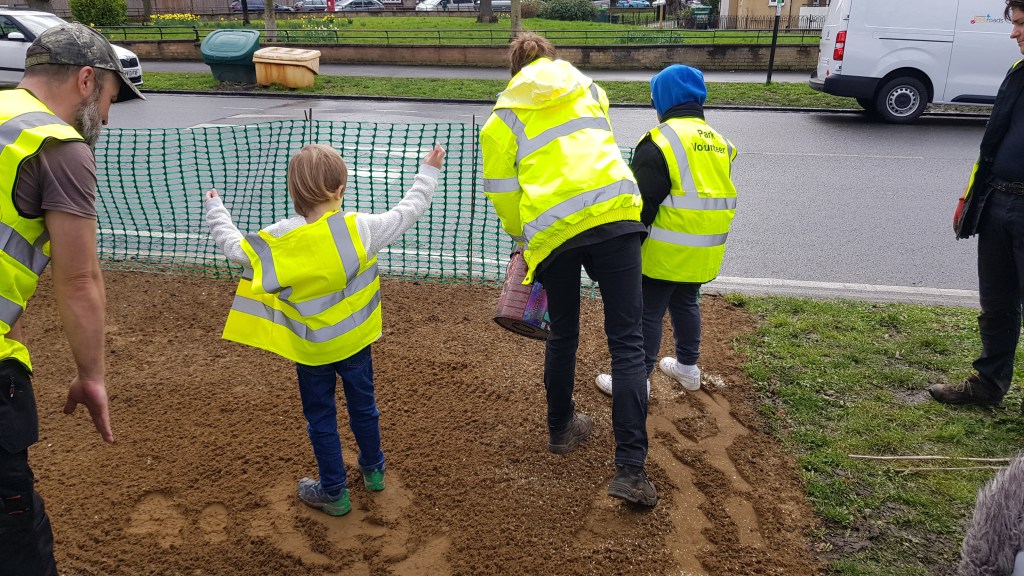
One of the essential elements of rewilding is the reintroduction of native plants, which can provide habitats for native wildlife, including bees. Bees play a crucial role in our ecosystems by pollinating plants, and wildflowers are a vital source of nectar and pollen for them.
The process was exciting for the kids, who used hand rollers after scattering the seeds into the ground. After the rainy morning, the sunny weather that followed made the experience even more enjoyable.
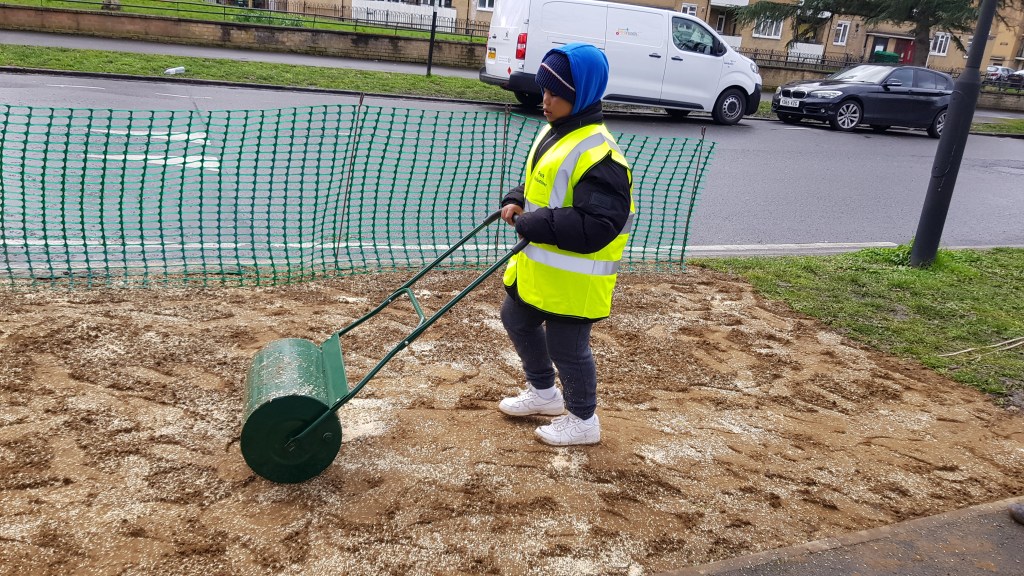
The seeds will take some time to germinate and grow, but once they do, they will provide a beautiful and colourful display of wildflowers that will support local bee populations. These wildflowers will also help to improve the park’s biodiversity by attracting other insects like butterflies and ladybirds.
By supporting local bee populations through the reintroduction of native plants and wildflowers, we can make a significant contribution to the health of our environment. The work done by the volunteers and kids is a great example of how small actions can have a significant impact on our environment.
 Friends of Agnes Riley Gardens